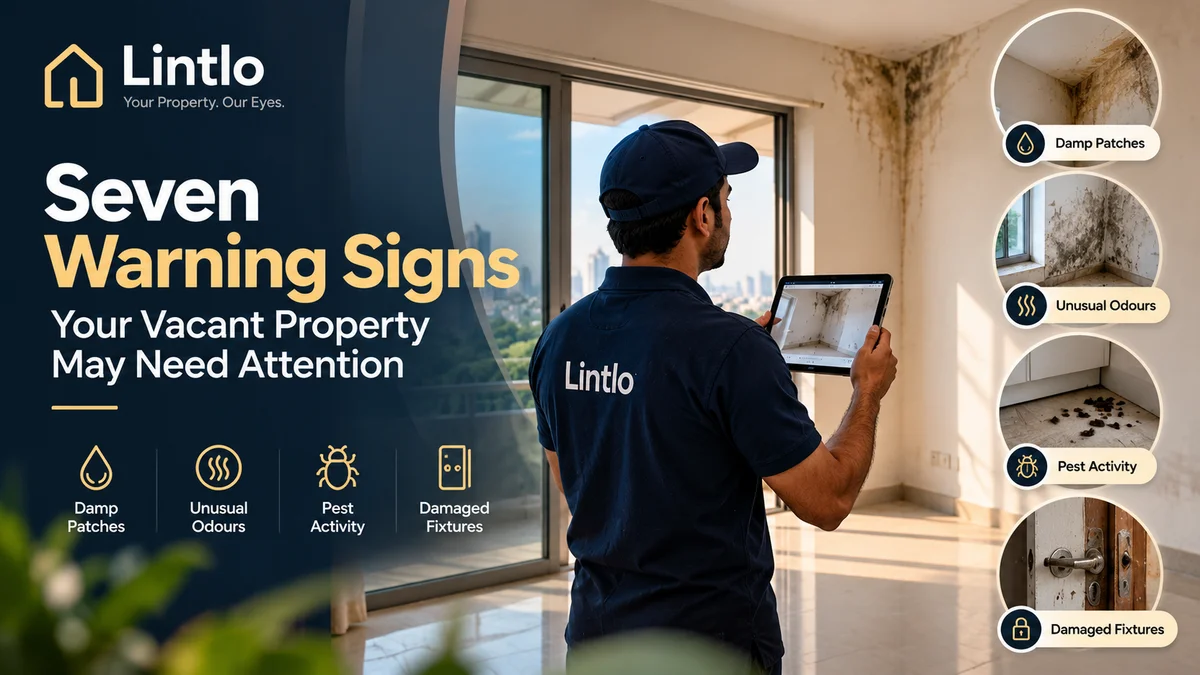
Seven Visible Warning Signs Your Vacant Property May Need Attention
Seven Warning Signs Your Vacant Property May Need Attention
A property that remains empty for weeks or months can develop issues without its owner noticing. A small damp patch, an unusual smell or a damaged fixture may go unnoticed until someone visits the home.
For homeowners living in another city, NRIs who own homes in Hyderabad, and landlords between tenants, periodic property checks can help identify visible concerns that may require further investigation.
Here are seven warning signs to look for when checking a vacant property.
1. Damp Patches or Water Stains
Look for discolouration on ceilings, walls and areas around windows or plumbing fixtures. Peeling paint, bubbling plaster or water marks may indicate moisture exposure.
What to do: Photograph the affected area and note its location. If the patch appears to be growing or there are signs of active leakage, arrange an appropriate professional assessment.
A visual inspection can document what is visible, but it cannot always identify the source of moisture.
2. Musty or Unusual Odours
A persistent musty smell may be associated with dampness, poor ventilation or other conditions inside the property. An unusual smell near a bathroom, kitchen or drain may also warrant further investigation.
What to do: Record where the smell is noticed and check for visible moisture or other obvious signs. Do not assume the cause based on the smell alone.
If the odour is strong, persistent or potentially hazardous, seek suitable professional assistance before continuing the inspection.
3. Visible Signs of Pest Activity
Look for droppings, damaged packaging, chewed materials, insect remains or visible pest activity around kitchens, storage areas and entry points.
What to do: Photograph visible evidence and identify the affected location. Arrange pest-control assistance if needed, subject to availability and a separate quotation.
A visual property check is not a substitute for a specialist pest inspection or treatment.
4. Damaged Doors, Windows or Locks
Check accessible doors and windows for visible damage, loose handles, broken glass, damaged frames or locks that appear faulty.
These conditions may affect how the property can be secured or prepared for its next occupant.
What to do: Document the damage and arrange repairs where necessary. If a lock appears compromised, prioritise an appropriate security assessment.
A scheduled visual visit does not provide continuous security monitoring or a guarantee against unauthorised entry.
5. Leaks or Problems Around Plumbing Fixtures
Inspect accessible areas around taps, sinks, toilets and visible pipe connections for dripping water, dampness, corrosion or water accumulation.
Even a small visible leak may need attention, particularly if the property will remain unoccupied.
What to do: Record the fixture and the visible condition. If active leakage is present, contact a suitable plumber or maintenance professional promptly.
Do not operate unfamiliar valves or equipment, or attempt repairs, unless it is safe and appropriate to do so.
6. Cracks, Peeling Paint or Deteriorating Surfaces
Paint that is peeling, plaster that is flaking or cracks that appear on walls and ceilings can indicate deterioration. However, not every crack has the same cause or level of significance.
What to do: Photograph the affected area and record its approximate location and visible extent. If a crack appears to be widening, is accompanied by displacement, or raises structural concerns, seek assessment from a qualified professional.
A visual inspection cannot certify structural safety.
7. Fixtures or Utilities That Appear Damaged
Look for visibly damaged light switches, exposed wiring, broken fittings, damaged exhaust fans or other fixtures that may require professional attention.
Also note visible signs of water accumulation near electrical equipment.
What to do: Keep away from potentially hazardous fixtures and arrange assessment by an appropriately qualified professional. Never touch exposed wiring or operate a switch in a potentially wet or unsafe area.
A visual inspection should document the concern, not attempt technical testing or repairs.
What Should You Do When You Find a Warning Sign?
Finding a visible issue does not automatically mean there is serious damage. The important step is to document it clearly and decide whether further action is appropriate.
Use this simple process:
Record the location: Identify the room or area where the concern appears.
Take photographs: Capture a clear overview and a closer image where safe and accessible.
Describe the observation: Record what is visible without guessing at the underlying cause.
Prioritise urgent concerns: Active leaks, possible electrical hazards and suspected structural issues may require prompt professional attention.
Arrange follow-up: Contact the relevant maintenance professional and document any reported repair.
Check again when appropriate: A later visual visit can document the visible status after the repair, but it does not certify the quality or completeness of the work.
How Often Should You Check a Vacant Property?
There is no single inspection frequency that suits every home. The appropriate schedule depends on the property's condition, age, previous maintenance issues, occupancy history, access arrangements and any known risks.
A property with a history of leakage may need closer follow-up than one with no known issues. Homes left vacant for extended periods may also benefit from a planned schedule of visual checks.
Discuss a suitable schedule with the relevant professionals when the property's condition or risks warrant it.
How Lintlo Can Help
Lintlo provides scheduled visual property inspections in Hyderabad for owners who cannot always visit their homes in person.
Depending on the selected service, the process can include:
A visual check of accessible property areas and visible fixtures.
Photo or video documentation of observed conditions.
A digital report to help owners understand what was observed.
Home-readiness assessments for move-in preparation.
Follow-up visual documentation after reported repairs.
Optional maintenance coordination, subject to availability and separate quotation.
Lintlo documents visible conditions; it does not provide structural certification, technical testing, continuous security monitoring or emergency response.
Explore the available services at Lintlo or contact the team to discuss your property and the type of inspection you need.
Final Thoughts
A vacant property can benefit from a consistent care routine. Damp patches, unusual odours, pest evidence, damaged fixtures and other visible changes are reasons to investigate further—not proof of a specific underlying problem.
For owners living away from Hyderabad, scheduled visual inspections and clear photo reports can make it easier to stay informed and organise the next steps.
Your Property. Our Eyes.