Smart Home Devices vs. Physical Property Inspections: What's the Difference?
Smart Home Devices vs. Physical Property Inspections: What's the Difference?
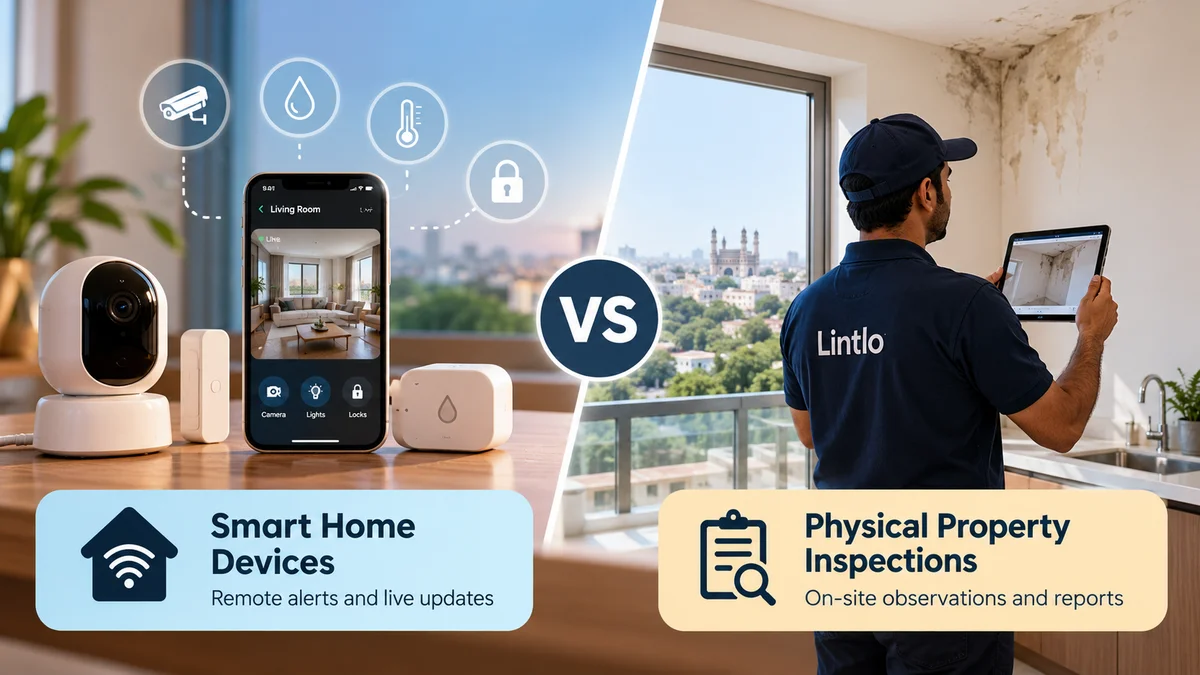
Technology has made it easier to access certain information about a property without being physically present. Smart cameras, connected sensors and other home devices can help owners receive alerts or check specific conditions remotely.
However, these tools do not provide the same information as an in-person property inspection.
If you own a home in Hyderabad but live in another city or country, understanding the difference can help you decide which tools are useful for your situation.
What Are Smart Home Devices?
Smart home devices use connected technology to provide specific information or allow certain functions to be controlled remotely.
Depending on the product and installation, examples include:
Smart cameras: Provide video or images of areas within their field of view.
Door and window sensors: Report certain opening or closing events.
Water-leak sensors: Detect water in the locations where they are installed.
Smart lights: Allow compatible lighting to be controlled remotely.
Connected environmental sensors: Measure selected conditions, such as temperature or humidity.
The information available depends on the device's capabilities, placement, connectivity, power supply and configuration.
A sensor can only report what it is designed and positioned to detect. It cannot automatically provide a complete picture of the property's condition.
What Is a Physical Property Inspection?
A physical visual property inspection involves visiting a property and observing accessible areas and visible conditions.
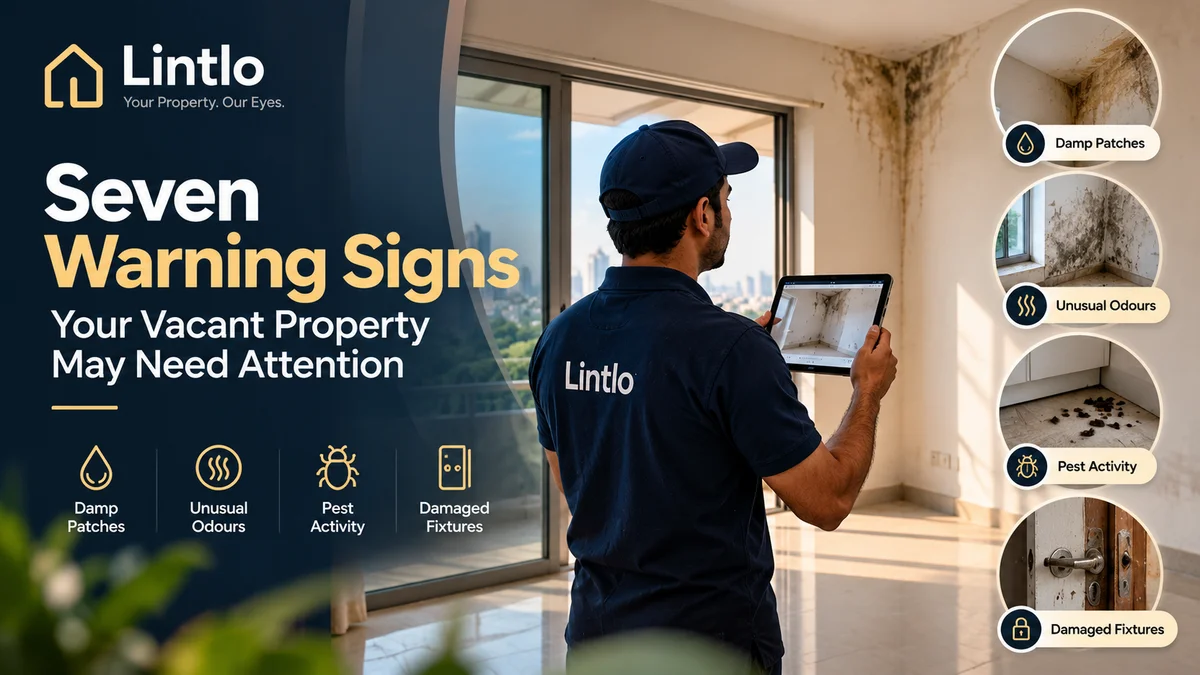
Depending on the agreed scope, this may include looking at walls, ceilings, floors, doors, windows, visible fixtures and signs of apparent damage or moisture.
The visit can also document general housekeeping and home-readiness concerns.
A report with photographs and written observations can help an owner understand what was visible at the time of the visit.
However, a visual inspection also has limitations. It does not automatically include technical testing, opening concealed systems, structural assessment or specialist certification.
Smart Devices vs. Physical Inspections
Feature | Smart home devices | Physical visual inspection |
|---|---|---|
Information source | Device readings, alerts or images | In-person observations |
Coverage | Limited by device type and placement | Limited by agreed scope and accessible areas |
Timing | May provide ongoing or event-based information | Records conditions during a scheduled visit |
Human observation | Depends on the device and its capabilities | An inspector observes accessible areas |
Photo documentation | Depends on the device | Can include visit photographs and a report |
Hidden defects | Usually not detected unless specifically measured by suitable equipment | Not guaranteed to be detected |
Technical certification | Not provided simply by device ownership | Not provided by a basic visual inspection |
Maintenance work | Does not automatically arrange repairs | May identify concerns that require separate action |
Neither approach guarantees that every problem will be identified. They provide different kinds of information.
When Smart Home Devices Can Be Useful
Smart devices may be helpful when you want information about specific conditions between property visits.
1. Checking selected areas remotely
A smart camera may let you view an area covered by the camera, provided the device is operating and connected.
However, it cannot show areas outside its field of view or establish the condition of every room.
Consider privacy carefully, especially if other people may enter or use the property.
2. Receiving specific alerts
A suitably installed water-leak sensor or door sensor may alert you to a particular event.
These alerts can be useful, but they depend on correct placement, device functionality, connectivity and power.
An alert system should not be treated as a guaranteed emergency-response service.
3. Tracking selected environmental conditions
Some connected sensors measure conditions such as temperature or humidity.
Such readings can provide useful information about the location where a sensor is installed. They do not establish the condition of the entire property or identify every possible cause of a problem.
When a Physical Inspection Can Be More Useful
A scheduled in-person visual inspection may be useful when you need a broader review of accessible areas rather than information from a few installed devices.
1. Reviewing multiple areas
A physical visit can document visible conditions in different accessible rooms and areas within the agreed scope.
This can be helpful when you have not visited the property for several months.
2. Documenting visible changes
An inspector can record observations and photographs that you can compare with previous reports.
For example, a visit may document a visible stain, damaged fitting or housekeeping concern that is not covered by your installed devices.
3. Preparing a property for move-in
If you plan to return to Hyderabad or prepare the property for a tenant, a home-readiness assessment may help document visible preparation needs.
You can then organise cleaning, maintenance or specialist assessments as appropriate.
4. Following up on reported repairs
After a repair has been arranged, a later visual visit may document the observable condition of the affected area.
This is documentation, not an independent certification of workmanship or a guarantee that the issue will not recur.
Do You Need Both?
For some property owners, smart devices and periodic physical inspections can complement each other.
Consider a homeowner who lives abroad and has a water-leak sensor installed near a washing machine.
The sensor may report water in that location if it detects it. A physical inspection can separately document the accessible areas of the home and other visible conditions within its scope.
The two methods provide different information. The sensor does not replace a physical visit, and the physical visit does not provide continuous monitoring between appointments.
Your choice should depend on the property's circumstances, the information you need and your budget.
What Should You Consider Before Buying Smart Devices?
Before investing in connected devices, consider:
Coverage: Which exact area or condition will the device monitor?
Connectivity: Does it depend on reliable internet access?
Power: What happens if the battery runs out or electricity fails?
Maintenance: Who will check that the device is operating correctly?
Privacy: What information is collected, and who can access it?
Alerts: Who will respond if an alert arrives?
Limitations: What conditions will the device not detect?
Do not assume that buying a camera or sensor makes a property continuously monitored in a practical sense. Someone still needs a clear process for responding to relevant information.
How Lintlo Fits Into Remote Property Care
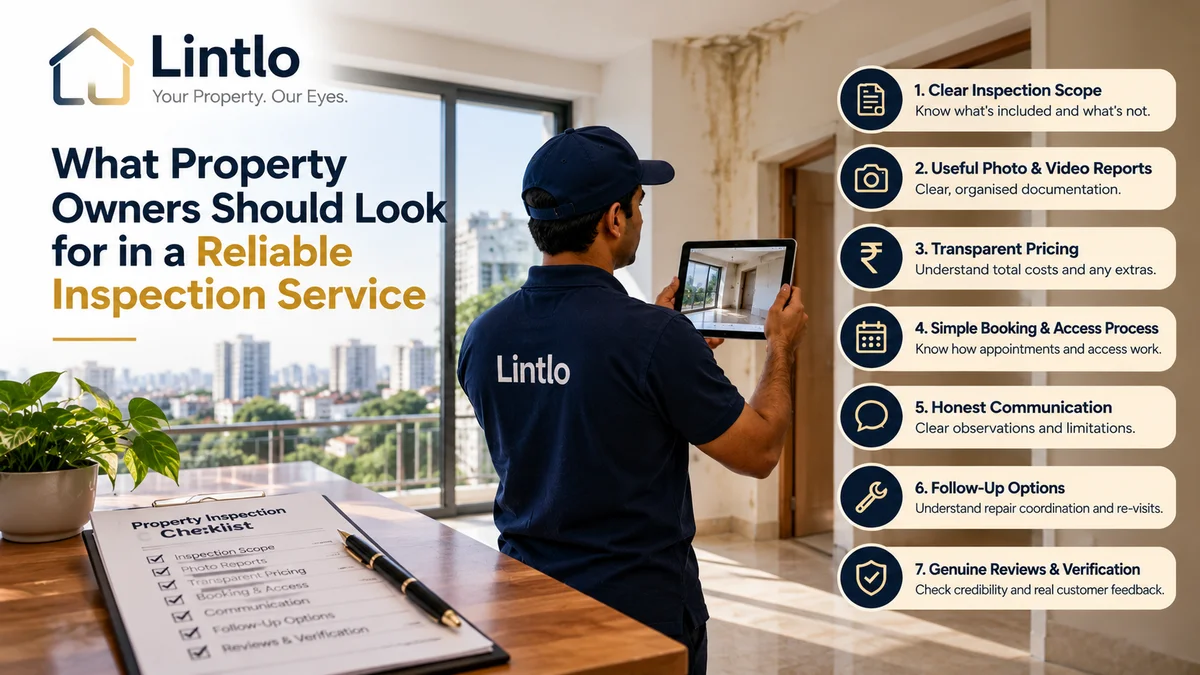
Lintlo provides scheduled visual property inspections, photo and video documentation, digital reports and home-readiness assessments for residential properties in Hyderabad.
Its services are intended to help owners understand visible property conditions and plan next steps.
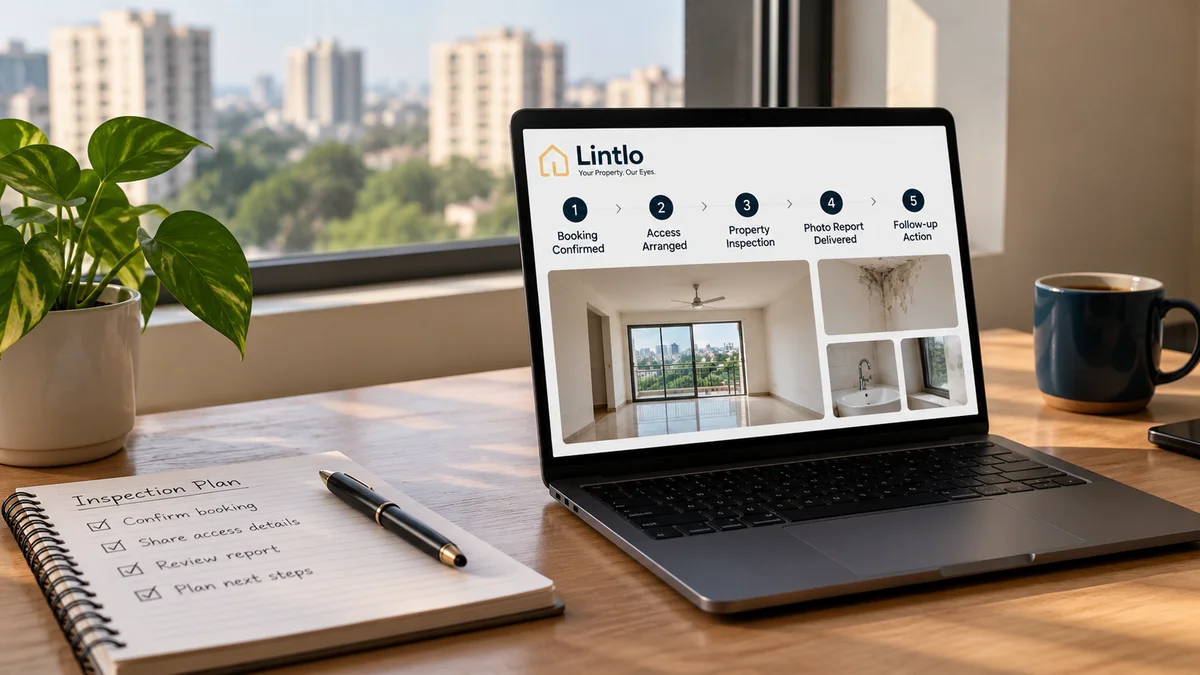
Available packages include:
Lintlo Check — ₹1,499 per visit: A one-time visual inspection and report for eligible residential properties up to 1,500 sq. ft.
Lintlo Ready — ₹1,999 per service: A home-readiness assessment for planned owner or tenant move-in.
Lintlo Care — ₹2,499 per package: Two visits within two months to document known issues and visually check their status after repairs.
Lintlo's scheduled visits are not continuous security monitoring, smart-device monitoring or emergency response. They also do not replace specialist technical assessments.
Maintenance coordination may be available separately, subject to availability, quotation and your approval.
Learn more at Lintlo.
Frequently Asked Questions
Can smart devices replace property inspections?
Not completely. Smart devices provide specific information according to their capabilities and placement. A physical visual inspection can document accessible areas and visible conditions within its agreed scope.
Can a smart camera identify property damage?
A camera may show visible damage within its field of view, depending on image quality and conditions. It cannot inspect areas it cannot see or establish every underlying cause.
Are smart sensors useful for vacant properties?
They may be useful for monitoring selected conditions, such as water detection or door openings, if correctly installed and maintained. Their coverage and limitations should be understood.
Does a physical visual inspection detect hidden defects?
Not necessarily. Concealed defects and technical concerns may require additional specialist investigation.
Final Thoughts
Smart home devices and physical property inspections are not competing solutions that must replace one another. They provide different types of information.
Connected devices can report selected conditions between visits, while a physical visual inspection can document observable conditions across accessible areas at a particular time.
If you own a property in Hyderabad while living elsewhere, choose the approach that matches your needs and understand its limitations.
Lintlo — Your Property. Our Eyes.