How Technology Makes Remote Property Checks More Convenient
When you live far away from your property, one of the biggest challenges is understanding its current condition without visiting in person.
Technology has made sharing property updates more convenient. Smartphones can capture photographs and videos, digital reports can organise observations, and online communication can help owners coordinate the next steps.
However, technology is most useful when it supports a reliable process. A photograph alone cannot replace an on-site visit, and a video cannot confirm the condition of every hidden system in a building.
Here is how digital tools can help property owners stay informed.
1. Smartphone Photography Provides Visual Updates
Photographs can help an owner see the condition of accessible areas without travelling.
For example, an owner living in another city may want updated photographs of the living room, windows, walls, and visible fixtures before returning to Hyderabad.
Clear photographs can help document:
Visible marks or damage.
The apparent condition of accessible fixtures.
Areas that may need cleaning.
Visible changes since an earlier documented visit.
For useful comparisons, photographs should be clear and, where possible, taken from similar angles during subsequent visits.
2. Videos Can Provide Additional Context
A short video walkthrough can show the relationship between different areas of a property more clearly than isolated photographs.
It may help an owner understand the layout, the appearance of accessible rooms, or the location of a visible concern.
However, a walkthrough has limitations. It may not reveal hidden moisture, concealed damage, internal plumbing problems, or defects that require specialist equipment.
Video documentation should therefore complement an agreed inspection rather than be presented as a technical certification.
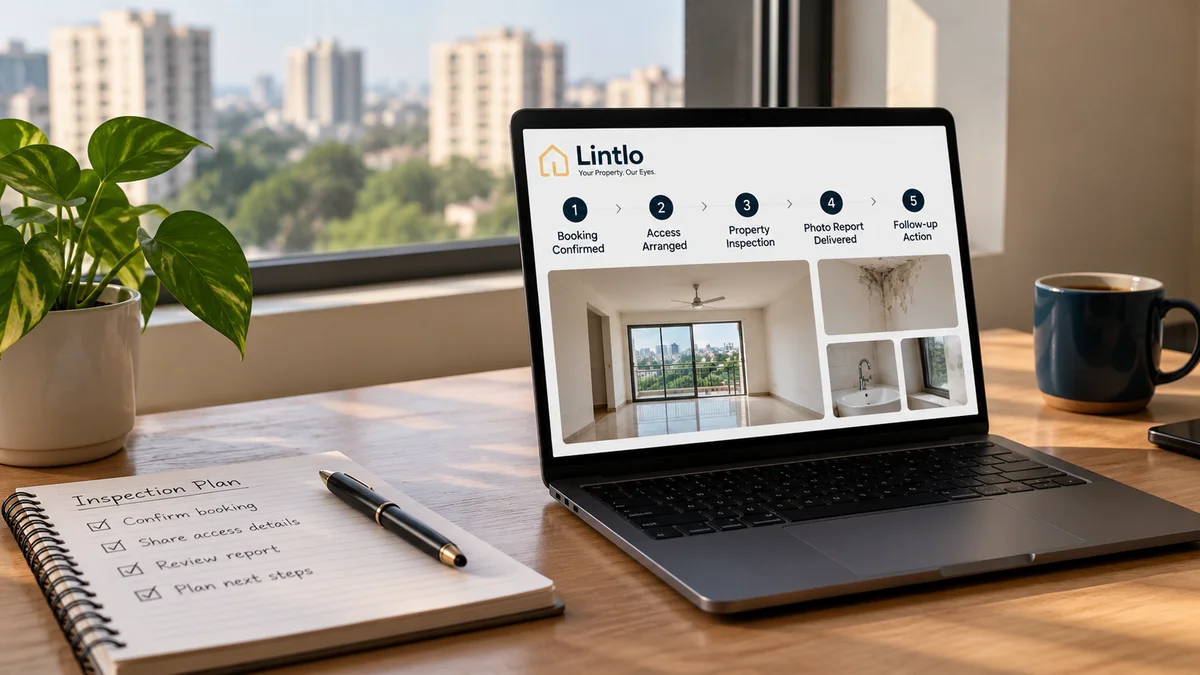
3. Digital Reports Organise Property Information
Receiving photographs through multiple messages can make it difficult to understand what happened during a visit.
A structured report can organise the information into a more useful format.
A helpful report may include:
Visit date and property details.
Areas covered by the visit.
Relevant photographs.
Observations about visible conditions.
Issues requiring attention.
Recommended follow-up actions, where appropriate.
A clear report helps owners distinguish between what was observed, what remains uncertain, and what may require additional investigation.
4. Online Communication Helps Owners Coordinate Next Steps
Property management often involves more than identifying a problem. Owners may need to clarify the issue, approve a quotation, schedule a service, or request additional documentation.
Phone calls, messaging, email, and digital records can make this coordination more convenient.
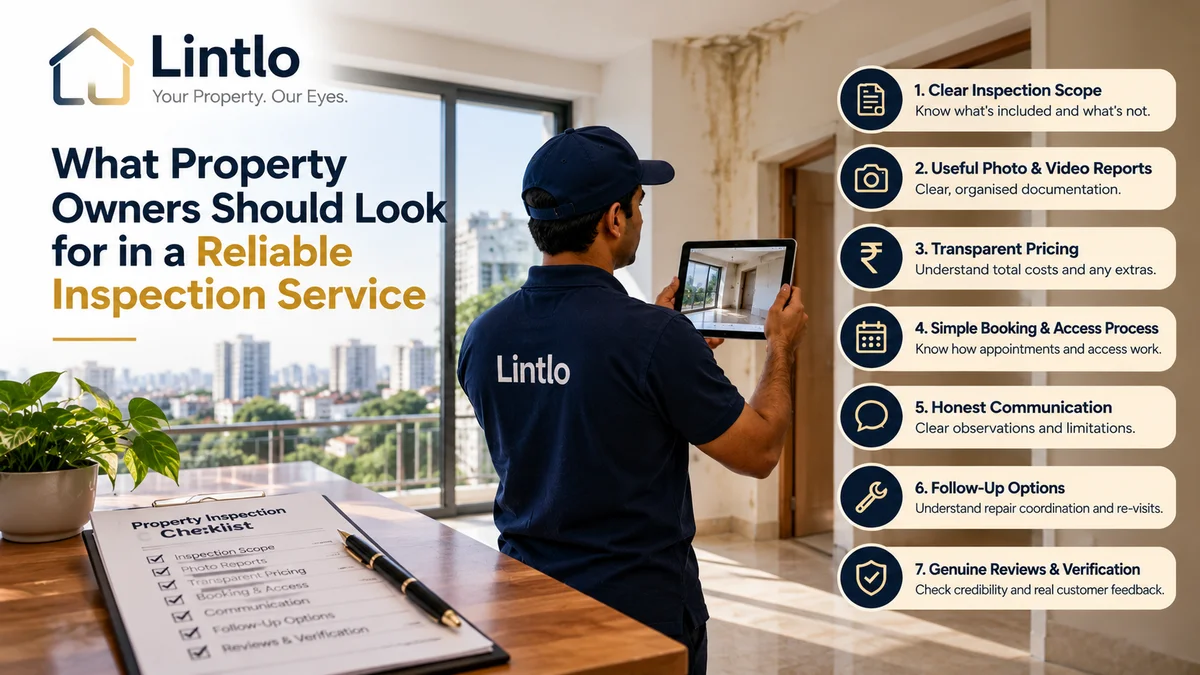
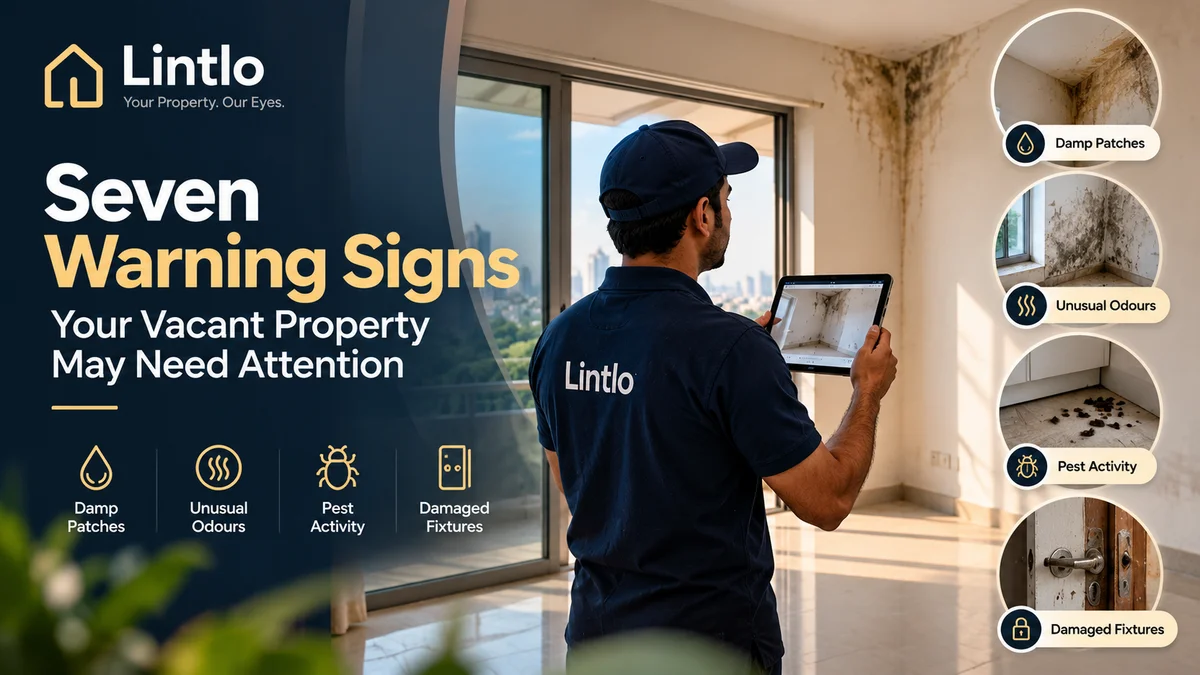
For example, suppose a visual visit documents a damp patch near a window. The owner can review the photographs, ask questions, and decide whether to arrange further assessment. The photograph itself does not establish the cause of the dampness.
Clear communication helps avoid treating an observation as a confirmed diagnosis.
5. Smart Devices and Physical Visits Serve Different Purposes
Smart cameras, sensors, and connected devices can provide alerts or information about specific conditions, depending on their capabilities and installation.
A physical property visit serves a different purpose: a person can document accessible areas and visible conditions within the agreed inspection scope.
Neither approach provides complete visibility into every possible issue. A sensor may detect a specific change but cannot document the entire property. A visual visit may identify an observable concern but cannot certify concealed systems.
Some owners may find a combination of tools useful, depending on their property and budget.
6. Technology Does Not Replace a Clear Service Scope
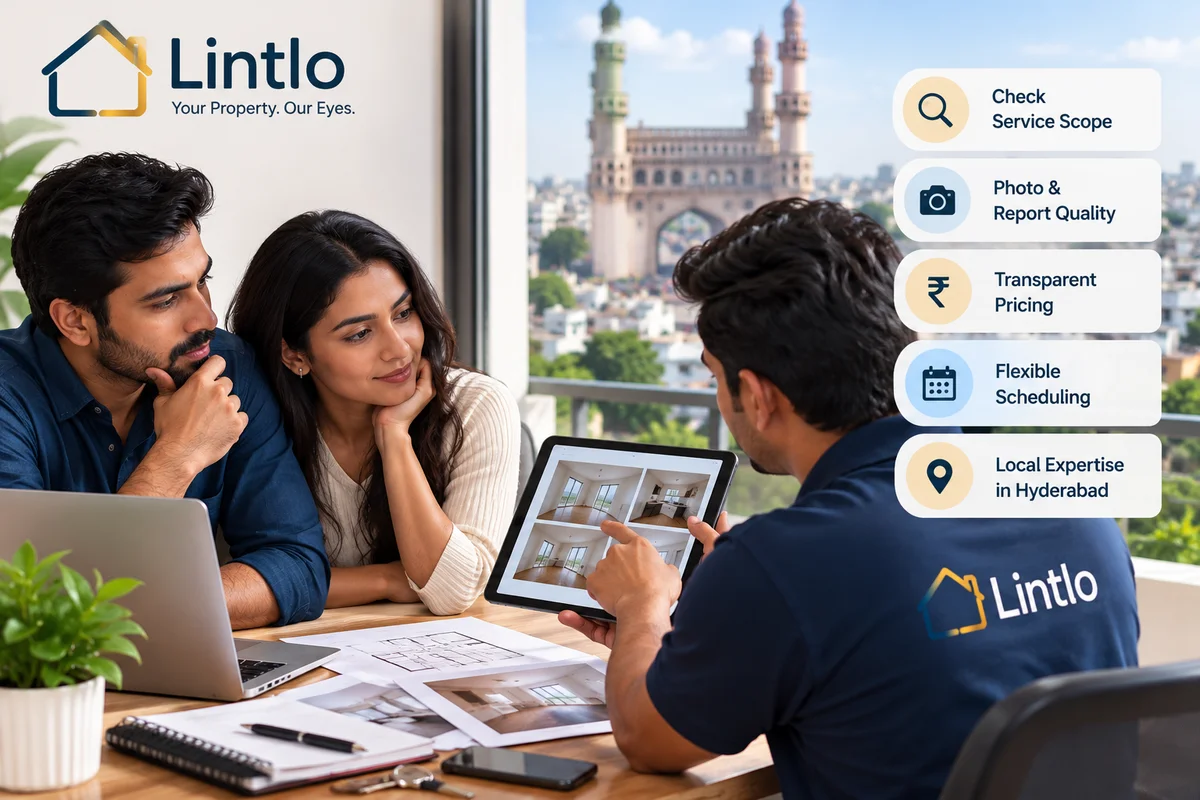
Before arranging a remote property check, confirm what the provider will actually do.
Ask:
Will someone physically visit the property?
Which areas will be covered?
Will photographs or videos be provided?
Will you receive a written report?
What happens if a visible concern is found?
Are repairs or specialist assessments included, or quoted separately?
These questions help ensure that the service matches your expectations.
How Lintlo Supports Remote Property Owners
Lintlo provides scheduled residential property visits in Hyderabad, with visual inspections, photo and video documentation, digital reports, home-readiness assessments, and follow-up visual checks after reported repairs.
The aim is to help owners understand the property's observed condition and make informed decisions while away.
Technology supports the documentation and communication process; it does not replace the physical visit or guarantee that every issue will be identified.
Conclusion
Digital tools have made remote property updates more convenient by improving how information is captured, shared, and organised.
The most useful approach combines appropriate on-site visits, clear documentation, honest communication, and follow-up when necessary.
Explore Lintlo's property inspection services at /.
Lintlo — Your Property. Our Eyes.